Showing posts with label folklore. Show all posts

Thursday, August 8, 2019

Folklore Thursday: The Wild Hunt

Hello everyone and welcome to another edition of Folklore Thursday.

Today we travel to Europe exploring another one of its legendary histories. The Wild Hunt.

*The Wild Hunt is a folklore motif that historically occurs in European folklore, typically involve a ghostly or supernatural group of hunters passing in wild pursuit. The hunters may be either elves, fairies, or the dead.

*In according to legends, the Wild Hunt has had many different leaders. Most notable ones are Odin or Woton, Berchta, Arthur, and Gywn ap Nudd. Others names are biblical figures such as Cain, Herod, Gabriel, or the Devil.

AsgĂ„rdsreien [The Wild Hunt of Odin] (1872) by Peter Nicolai Arbo
  *Seeing the Wild Hunt was thought to presage some catastrophe such as war or plague, death to those who witness the Hunt. *Experts in conclusion to the body of the lore surrounding the Wild Hunt finds a number of themes that connect powerfully to the dead and the underworld.

That's a wrap for this week's folklore exploration, friends! Tune in next week!

*Source(s): Wikipedia/Wild Hunt
*norse-mythology.org/the-wild-hunt/
*Encyclopedia Mythica

Thursday, July 18, 2019

Folklore Thursday: Basilisk

And we're back with this week's Folklore Thursday.

Today we explore one of the most vicious and terrifying serpents in legends, the basilisk!

*In European legends, a basilisk is mythical beast reputed to be a serpent king, which is a hybrid from a rooster and a serpent. A single glance from the beast can cause death. Other accounts say that it leaves deadly poison in its wake and spits venom. *Another name for the basilisk is a cockatrice.

*The Naturalis Historia of Piny the Elder says the basilisk can be killed by the odor of the weasel, which according to Piny, was thrown into the basilisk's hole, recognizable because of the surrounding shrubs and grass was scorched by its presence.

And that's it for this week's folklore figure on this Thursday, friends. Until next time!

*Source(s): Wikipedia & Encyclopedia Mythica


Thursday, July 11, 2019

Folklore Thursday: Kelpie

Happy Thursday all folklore aficionados!

Welcome to my latest edition of Folklore Thursday! Each week I will give the rundown on the legendary, the weird, and the scary.

Today, we're exploring the Scottish parts of mythology with...the kelpie!

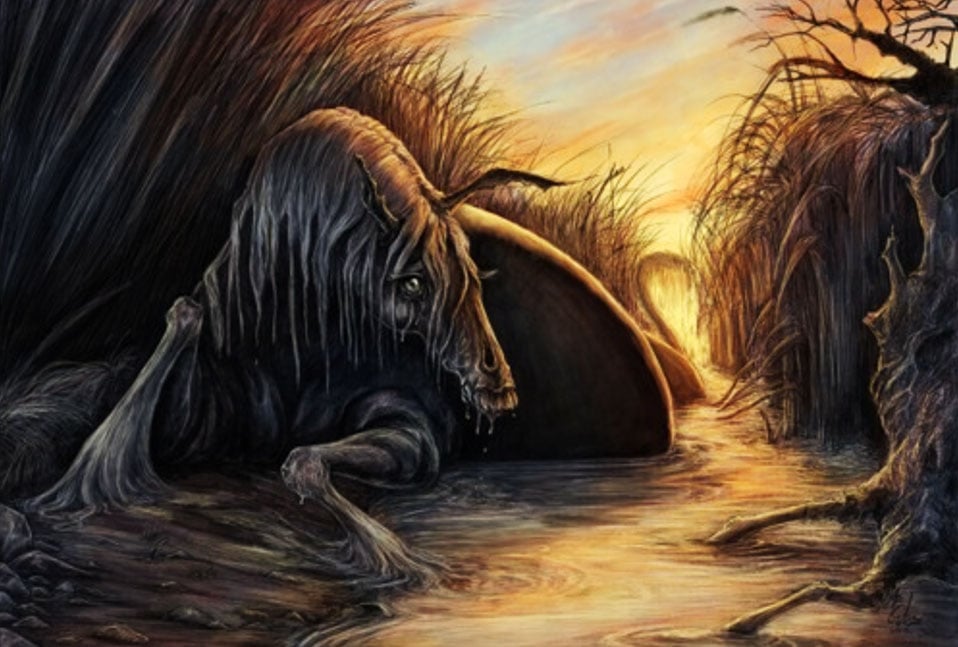
*In according to Encyclopedia Mythica, the kelpie is a water spirit that lurks in rivers and streams. It usually assumes the form of a black horse and entices people to mount it. Then rushes off to its watery lair taking the victim with it. Another account says they have the power to assume human form while keeping its hooves.

The kelpie can also cause swelling torrents, and may come out night after night to a farm to cause fear and annoyance. *In the past, human sacrifices were made to appease water gods and spirits. In time, this practice lead people to believe in the notion of evil water horses. However, the kelpie has been told in a positive light as saviors of drowning children. In some instance kelpies bear a warning to young women about handsome strangers.

So now you know about the kelpie.

Be there next week as we explore more folklore extravaganza!

*Encyclopedia Mythica

*Riding the Seas: The Kelpies and Other Fascinating Water Horses in Myth and Legend. 


Thursday, May 25, 2017

#FolkloreThursday: Kitsune

Here we are friends with the final installment of my #folklorethursday blogs. Today's folklore name is the Japanese fox, the Kitsune.

Prince Hanzoku terrorized by a nine-tailed fox. Print by Utagawa Kuniyoshi, 19th century.
*The term "kitsune" is Japanese for "fox". In Japanese folklore, foxes are a common subject. Legend has it they are intelligent beings, possessing magical abilities that increase their age and wisdom. In Yokai folklore all foxes have the ability to shape in human form.

The legends of the kitsune began in ancient Japan; foxes and humans lived closely together during the period. It has become closely associated with Inari, Shinto kami or spirit, and serves as its messengers.

Other stories of the kitsune depict them as tricksters, faithful guardians, friends, lovers, and wives. The one notable aspect of them are the number of tails they have. More tails a kitsune has (many as nine), the older, wiser, and more powerful it is.

That's all for the #FolkloreThursday blog series, folks! It's been a pleasure to explore these myths and legends with you!

*Wikipedia/kitsune
 

Wednesday, May 17, 2017

#FolkloreThursday: Redcap

Welcome back to this week's edition of my #folklorethursday.

Here I present to you the Redcap or Red Cap.

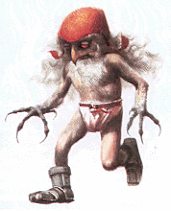
These are murderous, malevolent, dwarfs, goblins, elves or fairies found in Border Folklore. Legend has it that they inhabit ruined castles found along the border of England and Scotland. The Redcap was first mentioned in the 14th century by William II de Soules.

*Recaps are known to to murder travelers who stray into their homes and dye their hats with their victims' blood, they must kill regularly, for if the blood staining their hats dries out and they die.

They are very fast in spite of their heavy iron spikes and iron-shod boots they wear. Redcaps are depicted as sturdy old men with red eyes, taloned hands and large teeth, wearing a redcap and bearing pikestaff.

Another legend says the recap familiar of Lord William de Soules, called "Robin Redcap" , is said to have wrought much harm and ruin in the lands of his master's dwelling, Hermitage Castle. In one legend William was taken to the Ninestane Castle, a circle of stones by the castle, then wrapped in lead and boiled to death. In reality, William de Sous was imprisoned in Dumbarton Castle and died there, following his confessed complicity in the conspiracy against Robert the Bruce in 1320.

Tune in for next week as I explore more myths and legends scary for all ages.

*Wikipedia/Recap


Thursday, May 11, 2017

#FolkloreThursday: Bastet

Welcome back to another edition of Folklore Thursday on my blog site. This week it's the Egyptian goddess Bastet.

 In Egyptian mythology Bastet was a cat-headed goddess and a solar deity until Greek influence on Egyptian society, she became a lunar goddess associated with the Greek goddess Artemis. *During the  2nd Dynasty (2890-2686), Bastet was either a wild desert cat or lioness, and only became associated with the domesticated cat around 1,000 BCE. She was commonly depicted as a woman with a head of a wildcat, lioness. or a domesticated cat.

Bastet was commonly paired with Sekhmet, the lion-headed goddess of Memphis, Wadjet, and Hathor. Her title was "avenger" god sent to lay waste to Egypt's enemies as one of the "Eyes of Ra." In according to legends, Bastet was called the "Daughter of Ra", a designation that placed her in the same ranks as Maat and Tefnut.

The cult of Bastet was centered in Bubastis from the 4th Dynasty. Bubastis was the capital of Egypt for a dynasty during the Late Period, where a few kings took her name into their royal titles.

They were made famous by the traveler Herodotus in the 4th century BCE, when he described his annals one of the festivals that takes place in honor Bastet.

And that's that for this week! Be there as I explore more folklore and legends this month.

*Encyclopedia Mythica


Wednesday, May 3, 2017

#FolkloreThursday: Daeva

Greetings, friends.

In the spirit of the Twitter hashtag #FolkloreThursday I'm blogging about various names found in world mythology and folklore each Thursday. I begin with the Persian demons called the Daevas.


You may remember them from the season one episode of Supernatural entitled "Shadow" where they were being summoned by the demon Meg for her evil purposes. Let's take a deeper look at these creatures, shall we?

*In according to Persian myths, Daevas are Zoroastrian demons that cause plague and disease. They are the male servants of Angra Mainyu (Ahriman), and the female servants are called the Drugs. Together they fight Ahuru Mazda and his Amesha Spentas.


Together with the Ahuras, the Daevas were a classification of gods and spirits. In later Persian religion they were degraded to a lesser kind of beings, called demons. The word "devil" is derived from their name.

The seven archdemons of the Daevas are Aesma Daeva, Aka Manah, Indra, Nanghaithya, Saurva, Tawrich, and Zarich.

That's it for this edition my Folklore Thursday blog and I'll be back next week.

*Encyclopedia Mythica