Hey! How's it going everyone?
Wow! Is it really 2018? Wait, where did the time go?
So what's everyone doing for this year? What are your goals/resolutions? I'll tell you what I'm doing this year.
Learn sign language. I'm thinking about adding something else to my forte as the year was coming up so I thought to learn a new language. You ask me, it's good way to expand oneself.
Publish poetry. Believe it or not. I have one piece of poetry published in a lit magazine two years ago. Now I'm going to take another shot at publishing more of my poetry in a book or another lit mag.
Publish comic book series. This is something I hope to accomplish. After all the researching and contacting an artist, I haven't hit gold in finding a home for a comic book project I planned on pitching. Good vibes here, people.
Write to ten people. In the age of social media, one can only wonder: Who sends letters and postcards? To me it's something that's lost in this digital fishbowl. A handwritten correspondence is a simple way to communicate with people without logging online to say "Hello" to somebody on social media platforms and it's much better to say something in a letter than on the internet.
Sorry, internet.
Read the books on my bookshelf. I might as well say it, I'm a book hoarder. Being a big reader I buy books a lot more than I read the ones on my shelf. Admitting this to myself, I donated some books to a local library so they'd serve the community.
And that's all for you on the ninth day of 2k18, cats! Happy Resolutions!
Tuesday, January 9, 2018

Friday, June 23, 2017
Twitter Monthly Challenge: Three Years Later!
June 23, 2014 was the beginning of a brand new trend for Twitter users who write.
High school English teacher and YA writer Kristy Acevedo made out this tweet that would be called the Twitter Monthly Challenge with the hashtag #JuneWritingChallenge.
Everyone had followed suit with the word count of 500 or more in a few days. Writers had begun sharing advice, motivation, musing about their favorite genres, and research complexities. The action would continue with #JulyWritingChallenge that would bring together all writers on Twitter.
Three years later, more challengers have come.
The task of being a Writing Challenge hashtag leader requires a daily commitment, as well as organization to keep track of progress from other challengers.
The rules are to write at least 500 words per day and post your results each day using the current hashtag.
As a participant, I will say joining the challenge has given me the motivation to start writing after a while and connecting with published or soon-to-be published authors. But I'm not the only one having fun with it. Here are testimonials from my compatriots:
There you have it! The amazing results from our Monthly Writing Challenge. Are you a writer looking to get pages written? Come answer the challenge at our website!
High school English teacher and YA writer Kristy Acevedo made out this tweet that would be called the Twitter Monthly Challenge with the hashtag #JuneWritingChallenge.
Who's in? JULY WRITING CHALLENGE! Starting July 1st, write 500 words minimum each day for 31 days. #Julywritingchallenge #amwriting— Kristy Acevedo ☮️📚 (@kristyace) June 23, 2014
Everyone had followed suit with the word count of 500 or more in a few days. Writers had begun sharing advice, motivation, musing about their favorite genres, and research complexities. The action would continue with #JulyWritingChallenge that would bring together all writers on Twitter.
Three years later, more challengers have come.
The task of being a Writing Challenge hashtag leader requires a daily commitment, as well as organization to keep track of progress from other challengers.
The rules are to write at least 500 words per day and post your results each day using the current hashtag.
As a participant, I will say joining the challenge has given me the motivation to start writing after a while and connecting with published or soon-to-be published authors. But I'm not the only one having fun with it. Here are testimonials from my compatriots:
I remember being one of the first who signed up. It's been helpful and rewarding.-Nina Lake
Monthly writing challenge keeps me on track. It's so refreshing!-Wendy Turner
I'm so grateful I found this writing group. Great people. Finished my book & the rewrite because of the Writing Challenge! Happy I found it.-Christina Quesada
The Writing Challenge gives me an achievable goal, despite the challenges of writing, kids, and a full-time job.-Brie Paddock
I've written 500 words every day so far this year. Never in my life have I been so motivated to to dedicate time to my writing.-E.K. Moore
There you have it! The amazing results from our Monthly Writing Challenge. Are you a writer looking to get pages written? Come answer the challenge at our website!
Thursday, May 25, 2017
#FolkloreThursday: Kitsune
Here we are friends with the final installment of my #folklorethursday blogs. Today's folklore name is the Japanese fox, the Kitsune.
*The term "kitsune" is Japanese for "fox". In Japanese folklore, foxes are a common subject. Legend has it they are intelligent beings, possessing magical abilities that increase their age and wisdom. In Yokai folklore all foxes have the ability to shape in human form.
The legends of the kitsune began in ancient Japan; foxes and humans lived closely together during the period. It has become closely associated with Inari, Shinto kami or spirit, and serves as its messengers.
Other stories of the kitsune depict them as tricksters, faithful guardians, friends, lovers, and wives. The one notable aspect of them are the number of tails they have. More tails a kitsune has (many as nine), the older, wiser, and more powerful it is.
That's all for the #FolkloreThursday blog series, folks! It's been a pleasure to explore these myths and legends with you!
*Wikipedia/kitsune
 |
| Prince Hanzoku terrorized by a nine-tailed fox. Print by Utagawa Kuniyoshi, 19th century. |
The legends of the kitsune began in ancient Japan; foxes and humans lived closely together during the period. It has become closely associated with Inari, Shinto kami or spirit, and serves as its messengers.
Other stories of the kitsune depict them as tricksters, faithful guardians, friends, lovers, and wives. The one notable aspect of them are the number of tails they have. More tails a kitsune has (many as nine), the older, wiser, and more powerful it is.
That's all for the #FolkloreThursday blog series, folks! It's been a pleasure to explore these myths and legends with you!
*Wikipedia/kitsune
Wednesday, May 17, 2017
#FolkloreThursday: Redcap
Welcome back to this week's edition of my #folklorethursday.
Here I present to you the Redcap or Red Cap.
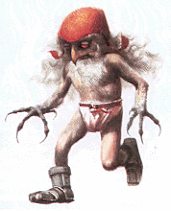 These are murderous, malevolent, dwarfs, goblins, elves or fairies found in Border Folklore. Legend has it that they inhabit ruined castles found along the border of England and Scotland. The Redcap was first mentioned in the 14th century by William II de Soules.
*Recaps are known to to murder travelers who stray into their homes and dye their hats with their victims' blood, they must kill regularly, for if the blood staining their hats dries out and they die.
They are very fast in spite of their heavy iron spikes and iron-shod boots they wear. Redcaps are depicted as sturdy old men with red eyes, taloned hands and large teeth, wearing a redcap and bearing pikestaff.
Another legend says the recap familiar of Lord William de Soules, called "Robin Redcap" , is said to have wrought much harm and ruin in the lands of his master's dwelling, Hermitage Castle. In one legend William was taken to the Ninestane Castle, a circle of stones by the castle, then wrapped in lead and boiled to death. In reality, William de Sous was imprisoned in Dumbarton Castle and died there, following his confessed complicity in the conspiracy against Robert the Bruce in 1320.
Tune in for next week as I explore more myths and legends scary for all ages.
*Wikipedia/Recap
Here I present to you the Redcap or Red Cap.
*Recaps are known to to murder travelers who stray into their homes and dye their hats with their victims' blood, they must kill regularly, for if the blood staining their hats dries out and they die.
They are very fast in spite of their heavy iron spikes and iron-shod boots they wear. Redcaps are depicted as sturdy old men with red eyes, taloned hands and large teeth, wearing a redcap and bearing pikestaff.
Another legend says the recap familiar of Lord William de Soules, called "Robin Redcap" , is said to have wrought much harm and ruin in the lands of his master's dwelling, Hermitage Castle. In one legend William was taken to the Ninestane Castle, a circle of stones by the castle, then wrapped in lead and boiled to death. In reality, William de Sous was imprisoned in Dumbarton Castle and died there, following his confessed complicity in the conspiracy against Robert the Bruce in 1320.
Tune in for next week as I explore more myths and legends scary for all ages.
*Wikipedia/Recap
Thursday, May 11, 2017
#FolkloreThursday: Bastet
Welcome back to another edition of Folklore Thursday on my blog site. This week it's the Egyptian goddess Bastet.
 In Egyptian mythology Bastet was a cat-headed goddess and a solar deity until Greek influence on Egyptian society, she became a lunar goddess associated with the Greek goddess Artemis. *During the 2nd Dynasty (2890-2686), Bastet was either a wild desert cat or lioness, and only became associated with the domesticated cat around 1,000 BCE. She was commonly depicted as a woman with a head of a wildcat, lioness. or a domesticated cat.
Bastet was commonly paired with Sekhmet, the lion-headed goddess of Memphis, Wadjet, and Hathor. Her title was "avenger" god sent to lay waste to Egypt's enemies as one of the "Eyes of Ra." In according to legends, Bastet was called the "Daughter of Ra", a designation that placed her in the same ranks as Maat and Tefnut.
The cult of Bastet was centered in Bubastis from the 4th Dynasty. Bubastis was the capital of Egypt for a dynasty during the Late Period, where a few kings took her name into their royal titles.
They were made famous by the traveler Herodotus in the 4th century BCE, when he described his annals one of the festivals that takes place in honor Bastet.
And that's that for this week! Be there as I explore more folklore and legends this month.
*Encyclopedia Mythica
Bastet was commonly paired with Sekhmet, the lion-headed goddess of Memphis, Wadjet, and Hathor. Her title was "avenger" god sent to lay waste to Egypt's enemies as one of the "Eyes of Ra." In according to legends, Bastet was called the "Daughter of Ra", a designation that placed her in the same ranks as Maat and Tefnut.
The cult of Bastet was centered in Bubastis from the 4th Dynasty. Bubastis was the capital of Egypt for a dynasty during the Late Period, where a few kings took her name into their royal titles.
They were made famous by the traveler Herodotus in the 4th century BCE, when he described his annals one of the festivals that takes place in honor Bastet.
And that's that for this week! Be there as I explore more folklore and legends this month.
*Encyclopedia Mythica
Wednesday, May 3, 2017
#FolkloreThursday: Daeva
Greetings, friends.
In the spirit of the Twitter hashtag #FolkloreThursday I'm blogging about various names found in world mythology and folklore each Thursday. I begin with the Persian demons called the Daevas.

You may remember them from the season one episode of Supernatural entitled "Shadow" where they were being summoned by the demon Meg for her evil purposes. Let's take a deeper look at these creatures, shall we?
*In according to Persian myths, Daevas are Zoroastrian demons that cause plague and disease. They are the male servants of Angra Mainyu (Ahriman), and the female servants are called the Drugs. Together they fight Ahuru Mazda and his Amesha Spentas.

Together with the Ahuras, the Daevas were a classification of gods and spirits. In later Persian religion they were degraded to a lesser kind of beings, called demons. The word "devil" is derived from their name.
The seven archdemons of the Daevas are Aesma Daeva, Aka Manah, Indra, Nanghaithya, Saurva, Tawrich, and Zarich.
That's it for this edition my Folklore Thursday blog and I'll be back next week.
*Encyclopedia Mythica
In the spirit of the Twitter hashtag #FolkloreThursday I'm blogging about various names found in world mythology and folklore each Thursday. I begin with the Persian demons called the Daevas.
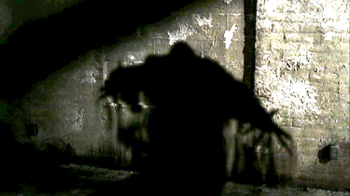
You may remember them from the season one episode of Supernatural entitled "Shadow" where they were being summoned by the demon Meg for her evil purposes. Let's take a deeper look at these creatures, shall we?
*In according to Persian myths, Daevas are Zoroastrian demons that cause plague and disease. They are the male servants of Angra Mainyu (Ahriman), and the female servants are called the Drugs. Together they fight Ahuru Mazda and his Amesha Spentas.
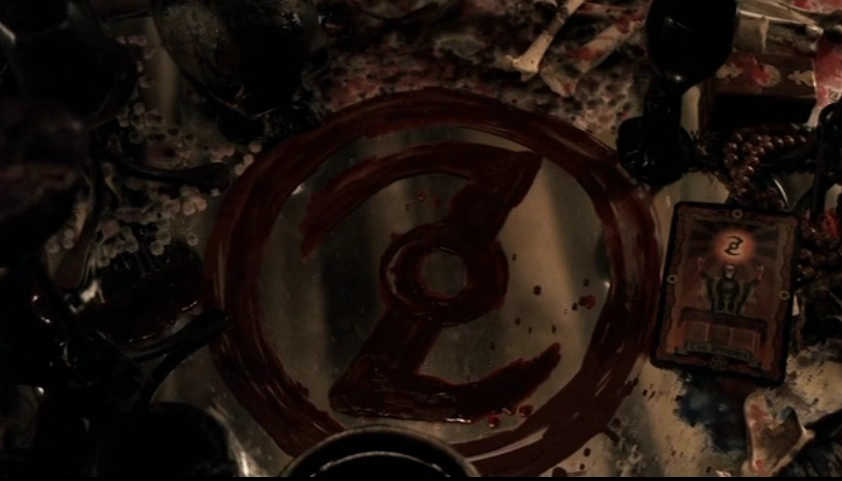
Together with the Ahuras, the Daevas were a classification of gods and spirits. In later Persian religion they were degraded to a lesser kind of beings, called demons. The word "devil" is derived from their name.
The seven archdemons of the Daevas are Aesma Daeva, Aka Manah, Indra, Nanghaithya, Saurva, Tawrich, and Zarich.
That's it for this edition my Folklore Thursday blog and I'll be back next week.
*Encyclopedia Mythica
Monday, April 24, 2017
Starting a Project with Questions
Alright I know how it goes for everybody. You got an idea for a story buy your mind is bombarded with a ton of questions.
When writing your story, you should start with the basic questions:
Let's begin.
Who-It's obvious, yes. But if you're thinking about building a world of your own design, you have to ask who are your characters. What do they do for a living? Whom do they have contact with? Highly recommended.
What-In terms of plotting the story, you have to ask yourself what the whole story is about. If you look at the foreign film En La Cama, you see the plot being about two strangers engaging in a one-night stand which becomes something more intimate.
Where-Location, location. This is the essential aspect to the story, in my opinion. A fictional setting can go in many different ways. Futuristic utopia, medieval fantasy, or a noir period. Now to bring the "who" aspect of worldbuilding to center stage, this is where it comes in. Your characters populate the world. Keep in mind that when giving the world you created whatever rules you have in mind, it has to maintain an equal level of reality too.
How-Another essential factor in creating your story setting is to ask how does it work. You got your population, governing body, limitation of resources, and so forth. What's key about it is to get an idea of how your world works for your characters, like say, how they interact with one another or where do they draw their source of energy for the whatchimacallit powering the city.
However you plot your story, remember to ask yourself the basic questions "who", "what" "where" and "how."
When writing your story, you should start with the basic questions:
- Who
- What
- Where
- How
Let's begin.
Who-It's obvious, yes. But if you're thinking about building a world of your own design, you have to ask who are your characters. What do they do for a living? Whom do they have contact with? Highly recommended.
What-In terms of plotting the story, you have to ask yourself what the whole story is about. If you look at the foreign film En La Cama, you see the plot being about two strangers engaging in a one-night stand which becomes something more intimate.
Where-Location, location. This is the essential aspect to the story, in my opinion. A fictional setting can go in many different ways. Futuristic utopia, medieval fantasy, or a noir period. Now to bring the "who" aspect of worldbuilding to center stage, this is where it comes in. Your characters populate the world. Keep in mind that when giving the world you created whatever rules you have in mind, it has to maintain an equal level of reality too.
How-Another essential factor in creating your story setting is to ask how does it work. You got your population, governing body, limitation of resources, and so forth. What's key about it is to get an idea of how your world works for your characters, like say, how they interact with one another or where do they draw their source of energy for the whatchimacallit powering the city.
However you plot your story, remember to ask yourself the basic questions "who", "what" "where" and "how."
Subscribe to:
Posts (Atom)